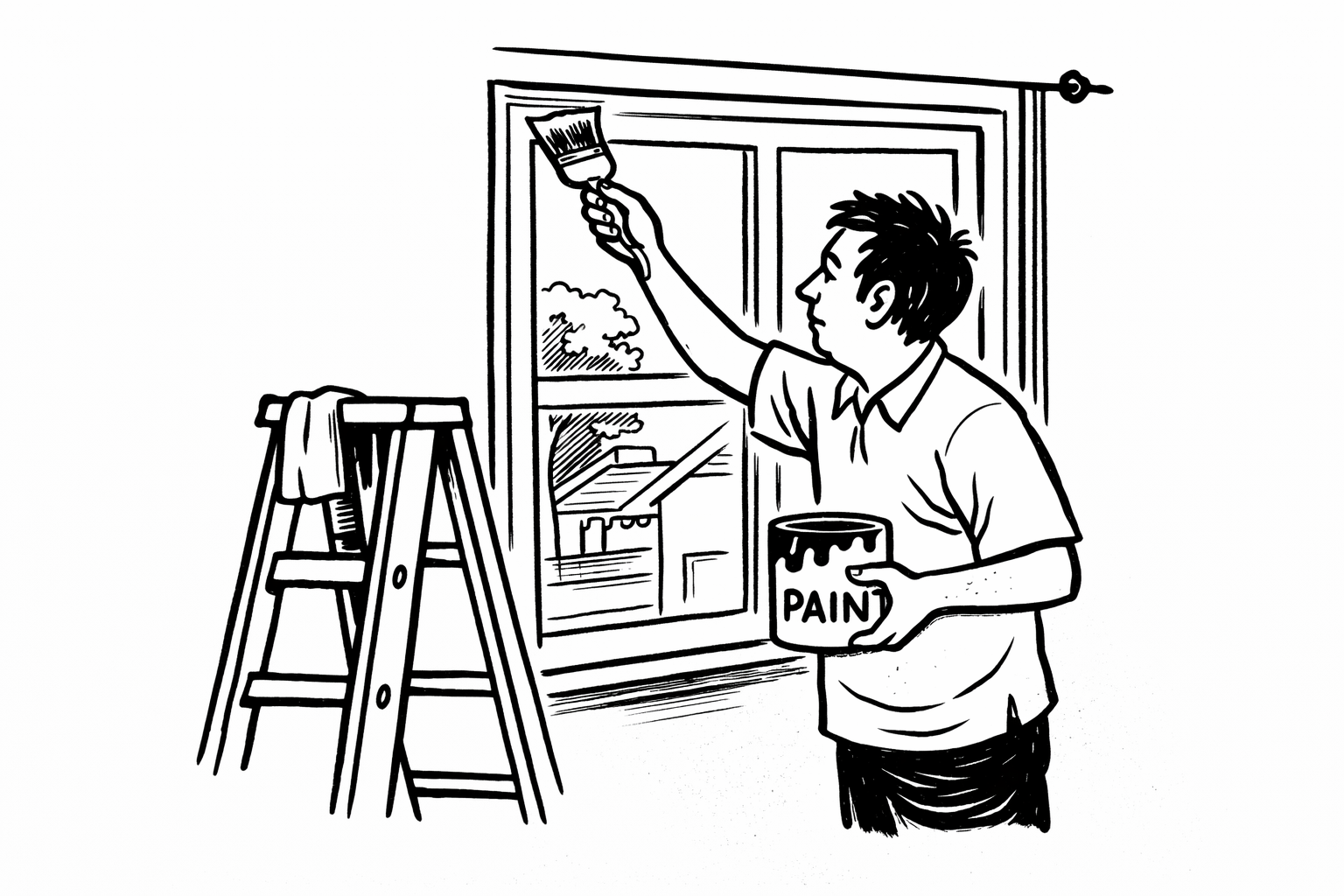
Interior painting
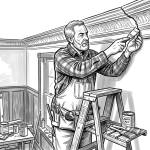
The foundation of a professional interior paint job lies in meticulous surface preparation, which often takes longer than the painting itself. A handyman or painter begins by clearing the room or centering furniture under drop cloths and protecting floors with heavy-duty builder's paper or canvas.
The walls are then inspected for imperfections; any holes or cracks are filled with joint compound or spackle, sanded smooth, and dusted. Applying a high-quality primer is a crucial next step, especially when covering dark colors or porous new drywall, as it ensures the finish coat adheres properly and the color remains vibrant and consistent across the entire surface.
The actual transformation occurs during the cutting-in and rolling phase, where precision meets efficiency. Using a high-quality angled brush, the painter "cuts in" along the ceiling line, baseboards, and corners where a roller cannot reach. Once the perimeter is defined, a lint-free roller is used to apply paint in large, overlapping "W" or "N" patterns to ensure even distribution and prevent visible lap marks. A second coat is typically applied after the first has fully dried, providing a deep, durable finish. The process concludes with the careful removal of painter’s tape while the paint is still slightly tacky and a final inspection to ensure a crisp, professional look that refreshes the home’s entire atmosphere.